
Why Kids Need Play and Stay: Red Balls and a Small Court Are Not “Dumbing Down”
The Short Answer
Red balls and a smaller court are not toys or simplifications for the sake of it. They are a carefully designed adaptation that helps children under 10 enter real tennis faster and more comfortably, achieve successful shots, and maintain interest in the game.
Why This Topic Matters
On courts in Budva, parents often express doubts: “Why not start immediately with the yellow ball? Doesn’t the red ball slow development?” These questions are understandable because adult tennis is familiar through television, where the game is played on a large court with a standard ball. Parents want their children to “play like adults” right away, to avoid wasting time or falling behind.
However, the reality is that for a small child, a large court and a hard yellow ball often cause frustration. They either can’t keep up with the ball or can’t return it, turning lessons into endless chases after missed shots. This reduces motivation and joy, which are more important at the beginner stage.
What the Coach Explains
Play and Stay is not simplification but an adaptation of tennis to the child’s level and age. Red and orange balls are softer and slower, bouncing easier within a small court. The small court is not a scaled-down adult court but a specially designed space where the child can move freely, see the ball, and play.
This format allows the child to hit the ball more often, participate in rallies, and gain real game experience. It’s not imitation but live tennis, adjusted to the child’s body and reaction capabilities.
When a TS WINNER coach in Budva conducts the first Play and Stay assessment, they focus not on how stylish the child’s swing is but on the ability to return the ball, move around the court, and engage in the game situation. This helps select the right format — red or orange ball, court size, and training goals.
If a parent insists on “playing like adults,” the coach gently explains that seriousness in tennis at the start is not heavy equipment but frequent successful ball contacts and enjoyment of the game. This approach builds a solid foundation and keeps motivation high.
What It Looks Like in Training
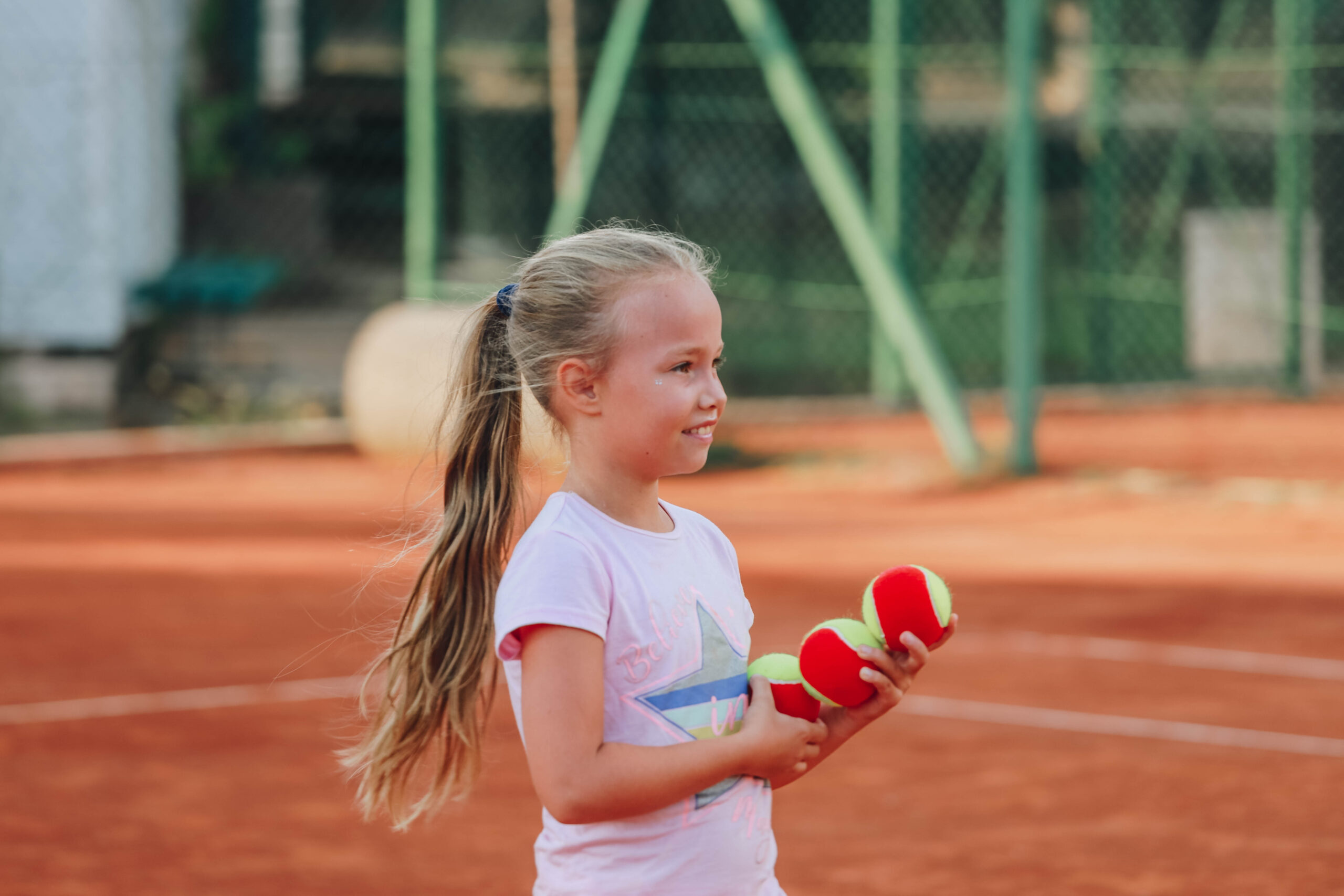
At trainings in Budva, for example at Slovenska plaza or near hotel Aleksandar, Play and Stay sessions are tailored to the child’s needs. Young children train on courts smaller than adult size, using red balls that bounce slowly and softly.
The coach offers simple game tasks: hitting the ball over the net, keeping the ball in motion, playing short rallies. Movements and strokes are chosen so the child can consistently hit the ball and feel confident.
This is not an exam or race for results but a calm immersion in the game, using mistakes as learning material. Live contact with the coach and support at every step help the child freely try new things.
Common Mistakes
1. Starting immediately with the adult yellow ball and large court, which often leads to the child not keeping up and quickly losing interest.
2. Comparing the child to adult players or professional strokes. At the start, the ability to keep the ball in play matters more than a beautiful swing.
3. Demanding the child “play like an adult” without considering their age and size, creating pressure and possible demotivation.
4. Ignoring early steps and trying to move immediately to complex exercises. It’s better to start gently and gradually increase the load.
5. Overlooking the child’s emotional state during training. Joy from playing is key to long-term development.
What You Can Do Now
- Calmly try a Play and Stay training with red or orange balls and a smaller court so the child can feel the game.
- Observe the child as a whole: how they move, react to the ball, and what challenges they face.
- Choose the format according to the child — start with what is comfortable and brings success.
- Talk with the coach to understand which stage and ball suit your child best.
- Use mistakes as learning opportunities without putting pressure on the child.
How TS WINNER Helps
At the TS WINNER school in Budva, we offer the Play and Stay format that considers the child’s age, height, and level. There are no demands to “play like adults” immediately; instead, there is support and live contact with the coach who will suggest realistic next steps.
You can book a trial session through @TSWinnerbot. This is a calm way to get acquainted with the format and see if it suits your child.
Conclusion
Red balls and a small court are not temporary substitutes but a full entry into real tennis for children under 10. This approach maintains motivation, helps start playing faster, and brings enjoyment. Parents should look at the child as a whole, choose the format individually, and calmly try different options without pressure.
If you want to give your child a realistic and gentle start in tennis, try Play and Stay training at TS WINNER in Budva. Booking is easy via @TSWinnerbot — and that will be the first step toward real tennis.
—
This text is adapted based on the ITF Tennis Play and Stay campaign research (2022) and TS WINNER practice in Budva. ITF does not endorse or partner with TS WINNER / DOO ALTERRA.
Book a training session
Choose how you’d like to contact us — we’ll reply and find a time.