
Choking under pressure: why the arm freezes on break point
Short answer
Choking on break point is not a sign of weak character but a natural disruption of usual technique under the high stakes of the point. The arm freezes because attention shifts from the ball to fear of error and the point’s importance, causing involuntary muscle tension. Short rituals between points—breathing, gaze focus, a simple cue phrase—and measured pressure during training help manage this without shame or criticism.
Why this topic matters
Many young players and adult amateurs notice that in crucial match moments—break points or tiebreaks—their technique seems to “disappear.” The hand tightens, shots become inaccurate, and confidence drops. This is often seen as “weakness” or “nerves.” However, this view is unhelpful: choking is not a character flaw but a bodily and attentional reaction to increased point value. Understanding this changes training and match approach—allowing gentle self-work and gradual learning to stay present without losing composure under pressure.
What happens to the player under pressure
Under normal conditions, technique is well practiced and automatic. But when the score is close and the point’s value is high, attention drifts away from the ball and stroke process, shifting to fear of losing, score thoughts, opponent’s reactions, and crowd. This causes the body to tense—the arm stiffens, stroke rhythm breaks, resulting in choking.
In sports psychology terms, this is called choking—failure of habitual skill due to overload of attention and emotions. It is important to understand this is not a “personal failure” but a normal reaction that can be worked on.
Why specifically break points and tiebreaks?
At these moments, the value of each point sharply increases, and the brain perceives the situation as critical. This intensifies internal pressure, triggers internal self-talk often negative (“don’t make a mistake,” “this is the deciding shot”). Attention scatters, and action becomes “re-coded”—instead of smooth movement, excessive tension appears.
Role of attention, self-talk, and bodily tension
- Attention: shifts from process to outcome, disrupting technique.
- Self-talk: negative thoughts increase fear and tension.
- Bodily tension: muscles contract, especially the arm, losing natural movement amplitude.
How to work with choking—ritual between points
To bring attention back to the next shot and reduce tension, a short ritual is useful:
1. Breathing. Slow exhale helps relax the body.
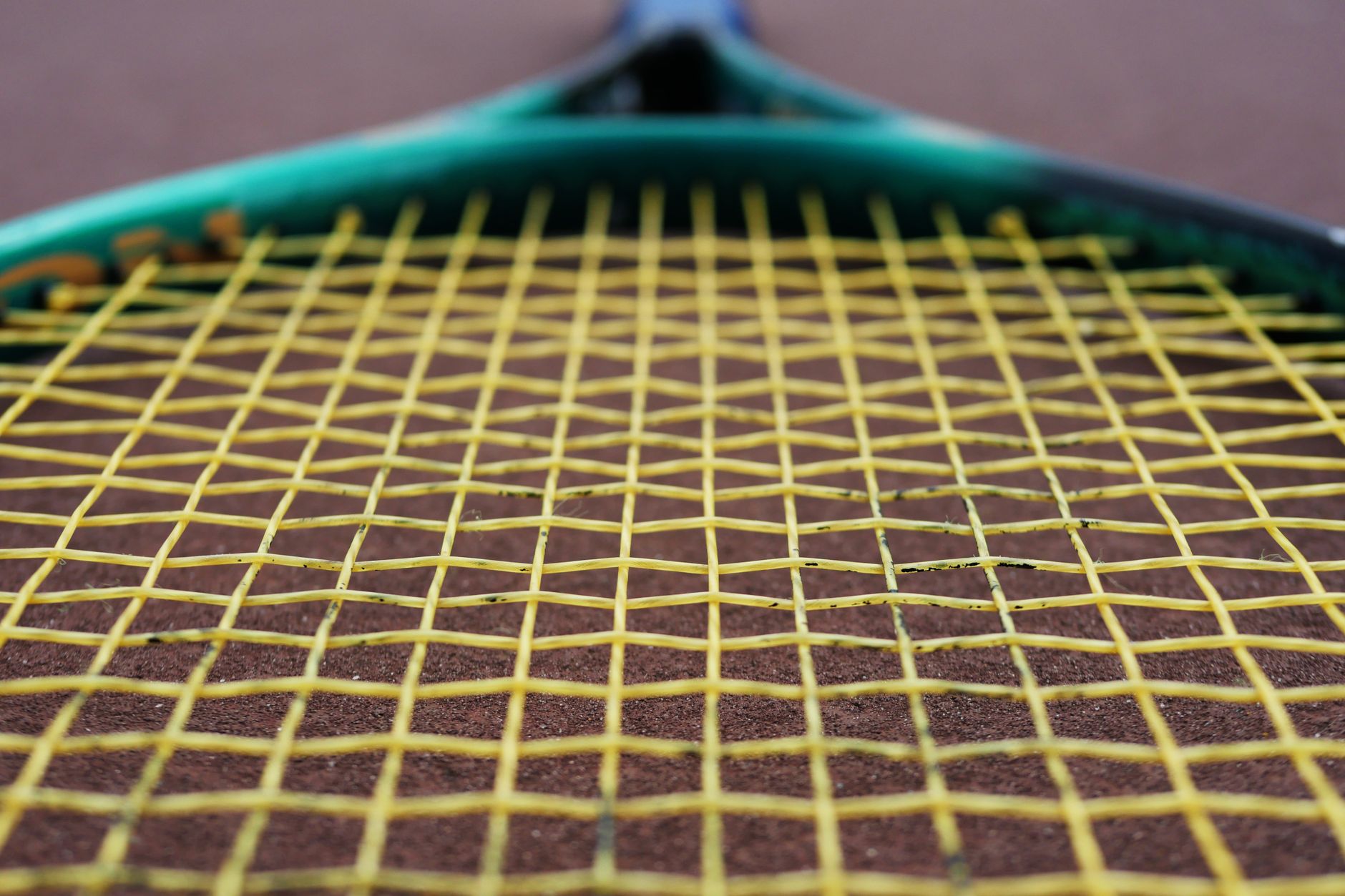
2. Gaze. Focus on racket strings or ball to shift attention from anxiety to action.
3. One simple phrase. For example, “watch the ball,” “exhale,” “lower”—something that returns focus to the process, not the outcome.
This ritual takes about 5–7 seconds between points—enough to “reset” and prepare.
How the coach doses pressure in training
At TS WINNER, we support the idea that pressure should be practiced gradually, without shame or criticism. For example:
- Serving at 0–40 score near the end of training to simulate stress.
- Short tiebreak with a specific task to practice concentration.
- Reviewing errors and states after tough rallies—without judging personality, only facts.
This approach helps players see choking as learning material, not a reason for shame.
Common mistakes when working with choking
- Feeling ashamed of trembling and tension. This is natural, and shame worsens the problem.
- Jumping straight into tough tournaments without preparation. Pressure must be practiced gradually.
- Saying “just don’t be nervous.” This phrase doesn’t help and increases internal conflict.
- Fixing only technique without attention to state. Technique is linked to body and attention; they cannot be treated separately.
What to do right now
Next time on court, try a short ritual between crucial points: slow exhale, gaze at racket strings, and one simple phrase that suits you. This helps keep attention on the process and reduce tension. Discuss your feelings and analyze key moments without shame with your TS WINNER coach in Budva via @TSWinnerbot.
How TS WINNER helps
In the TS WINNER club format in Budva (Slovenska plaza, hotel Aleksandar), we create a space for calm, pressure-free match practice. Coaches help gradually introduce stress situations, maintain live contact, and work individually with each player to find realistic next steps in development.
Key takeaways
- Choking is not a character verdict but a bodily and attentional reaction to high point value.
- Technique “disappears” due to attention shift from process to outcome and excessive bodily tension.
- A short ritual between points—breathing, gaze, simple phrase—helps restore attention and relax the arm.
- Pressure in training should be dosed to avoid increasing fear and shame.
- Mistakes are learning material, not reasons for criticism.
Conclusion
If your arm freezes at crucial moments, it doesn’t mean you are a “weak” player. It is a natural reaction that can and should be worked on gently—through simple on-court practices and coach support. The next step is calmly trying a short ritual between points and analyzing key moments with your TS WINNER coach. Your progress starts with live contact and a realistic approach.
—
If you want support and analysis of crucial points without pressure, contact us via @TSWinnerbot—we are here to help you take the next step in your game.
Source material used to prepare this article
- ITF CSSR Vol. 24 No. 68 (2016) — Psychological factors related to choking under pressure — ITF Coaching & Sport Science Review, 2016.
- ITF CSSR Vol. 20 No. 58 (2012) — Obstáculos mentales para el rendimiento tenístico en situaciones de partidos estresantes — ITF Coaching & Sport Science Review, 2012.
- Sports Psychology: Science and Practice (NSU, 2020) — NSU, 2020.
- Essentials of Exercise and Sport Psychology (Zenko & Jones) — Zachary Zenko, Leighton Jones.
—
Nataliia Nemsadze
Sport psychologist at TS WINNER tennis school · licensed coach (ATP · TSS · TSCG)
Book a training session
Choose how you’d like to contact us — we’ll reply and find a time.