
Biomechanics of the Tennis Stroke: How the Body Creates Power and Precision
A beautiful and powerful tennis stroke is not just about the wrist and racket. Behind every precise and strong shot is the coordinated work of the entire body: legs, torso, and arms. This sequence of muscle activation is called the kinetic chain. Developing the body separately from the racket is an important step to making the stroke natural and effective, rather than relying solely on wrist strength.
Introduction
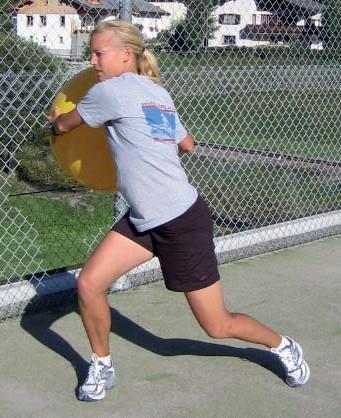
In tennis, it often seems that the key is working with the racket — how tightly to hold it, how to rotate the wrist, how fast to swing. But true technique starts with the body. Understanding how energy transfers from the legs through the torso to the arm helps make the stroke more powerful, smooth, and stable.
The kinetic chain is a way of transferring force from one part of the body to another in the correct order and rhythm. It’s important not just to “wave the arm,” but to engage each part of the body at the right moment.
What Is the Kinetic Chain in Simple Terms
The kinetic chain is like a wave that starts from the legs and moves up the body to the racket. First, the leg muscles activate, then the torso, shoulder, arm, and finally the wrist with the racket. Each stage adds its own energy and helps pass it on.
This sequence matters for two reasons:
- Stroke power increases because the whole body, not just the wrist, is involved.
- Accuracy improves as the body works in harmony and stability.
If the order is broken, for example by starting the movement only with the arm, energy is “lost” and the stroke becomes weak or uncontrolled.
The Role of Legs and Torso in Transferring Force to the Racket
Leg Work
The legs are the foundation of stability and the start of the stroke. They help:
- Take the correct position for the shot to maintain balance.
- Push off with the right force to transfer energy upward.
- Absorb court movement speed to prepare for the swing.
Without stable legs, the body will wobble and force transfer will be disrupted.
Torso Rotation
The torso is the main energy generator in the stroke. Its rotation creates a powerful impulse transmitted to the shoulder and arm. The better coordinated the legs and torso work, the smoother and stronger the stroke. The torso acts as the “engine” that starts the force transfer chain.
Coordination of Legs and Torso
The key to a beautiful stroke is the harmonious engagement of legs and torso. The legs don’t just stand still but work together with the body, creating a “wave-like” movement. This not only increases power but also makes the technique more efficient — muscles don’t tire prematurely.
Why Fixing Only the Arm Often Doesn’t Lead to Progress
Players and even coaches often focus on the arm and wrist, trying to “fix” the stroke there. However, this doesn’t produce the desired results for several reasons:
- Limited local work: the arm alone cannot generate enough force without support from the torso and legs.
- High injury risk: compensating stroke energy only with the wrist overloads it, leading to fatigue and injuries.
- Poor coordination: without proper body work, the stroke is abrupt and uncontrolled.
Experience from training at TS WINNER shows that attempts to “twist the wrist” without developing the body do not lead to stable progress.
The Athletic Block as the Biomechanical Foundation on Court
What Is the Athletic Block
The athletic block is developed strength, flexibility, and coordination of the legs and torso that allow the body to work as a single unit. In tennis, this is the most important foundation for stroke technique.
Role of Flexibility, Strength, and Coordination
- Flexibility provides freedom of movement and reduces injury risk.
- Strength helps generate power during push-off and torso rotation.
- Coordination allows muscles to activate at the right moment, maintaining the kinetic chain sequence.
Impact of Body Training on Stroke Technique
Training the athletic block develops not only muscles but also balance, rhythm, and smoothness of movement. This makes the stroke more natural and stable, improves ball control, and reduces fatigue.
Connection with TS WINNER Practice (Budva)
At TS WINNER in Budva, on Slovenska plaza and at Hotel Aleksandar, we pay great attention to developing the athletic block in tennis players. Our approach is comprehensive:
- Special exercises for legs and torso aimed at developing strength and coordination.
- Practice of smooth and correct force transfer in the stroke without overloading the wrist.
- Individualized session formats so everyone can start gently and calmly with strength exercises.
You can join the athletic training group through TS WINNER school — via WhatsApp, phone call, or the official program page. This approach helps players of all ages improve technique and reduce injury risk.
Practical Tips for Parents and Players
- Observe the child’s overall coordination, not just arm movement.
- Include leg, torso, and balance exercises in home training.
- Don’t rush to increase stroke power — first focus on movement quality.
- Regularly work on mobility and strength of legs and torso.
- Discuss a comprehensive approach to technique with the coach, not just strokes.
Common Mistakes When Working on Stroke Technique
1. Trying to “make the stroke with the wrist” without involving torso and legs.
2. Ignoring correct and stable leg positioning during the stroke.
3. Lack of athletic block development, leading to fatigue and injuries.
4. Excessive and uncoordinated racket swing that disrupts stroke smoothness.
5. Insufficient attention to the left arm and body balance, worsening control.
Key Takeaways
- A beautiful tennis stroke results from coordinated work of the entire body, not just the wrist.
- The kinetic chain is the sequence of energy transfer from legs through torso to arm and racket.
- Legs and torso work sets the power and stability of the stroke.
- Fixing only the arm often doesn’t lead to progress and can cause injuries.
- The athletic block is the foundation of effective technique and safety on court.
- A comprehensive approach to body and technique development is the key to gradual and stable improvement.
—
Develop your body separately from the racket to make stroke technique natural and effective. At TS WINNER in Budva, we help synchronize the work of legs, torso, and arms through athletic training, creating a solid foundation for a beautiful and powerful tennis stroke.
TS WINNER · Athletic Performance
Athletic Performance group
Footwork, conditioning, reaction and coordination — open for tennis and other sports.
- Drop-in — 20 €
- 8-session pass — 120 €