
How to Tell if Your Child Is Ready for Tennis: Age, Attention, Coordination
The first tennis lesson is not a test but an opportunity to gently introduce your child to tennis and understand which format suits them best at the moment. It is important to ease any tension and look at the child as a whole: their attention, movement, interest in the game, and willingness to listen to the coach.
Why Age Is a Guideline, Not a Strict Rule
Parents often ask, “At what age can a child start tennis?” Age is more of a starting point than a strict boundary. Some children at 5 years old are ready for playful training, while others benefit from a gentler, shorter session with lots of movement and without technical pressure.
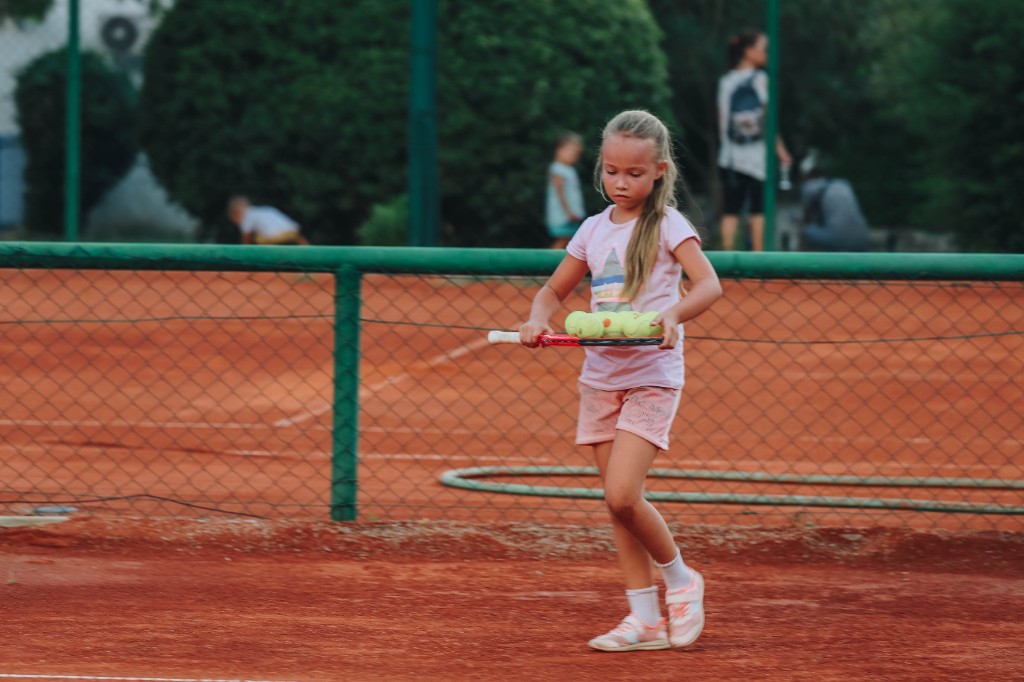
Tennis for very young children is not about perfect strokes or rules but about getting familiar with the ball, movement, coordination, and learning to follow simple instructions. It’s important to let the child enjoy the game without pressure.
What the Coach Observes in the First Lesson
The first meeting with the coach is not a talent test but a way to assess the child’s current readiness. Key aspects the coach usually evaluates include:
- Attention and focus. How well the child can maintain attention on short tasks and follow simple commands like come here, stop, throw, catch.
- Coordination and movement. How the child runs, stops, keeps balance, and reacts to a ball being thrown.
- Interest in the game. Whether the child shows a desire to participate and try, not just complete tasks for the parents.
- Attitude toward mistakes. Does the child try again or get upset and lose motivation quickly?
- Comfort in a group and interaction with the coach. Does the child feel calm around other kids and adults, and are they ready to engage?
The coach sees the child as a whole and based on this suggests how to structure the lessons — more play-oriented, individual, or group sessions.
Age Guidelines for a Calm Start
- 5–6 years old. Focus on play, short tasks, lots of movement, and minimal technical demands. Avoid rushing into formal techniques.
- 7–8 years old. Simple technical elements and a bit more structure can be introduced while keeping the sessions playful.
- 9–10 years old. Children usually understand tasks better, are more attentive, and can gradually handle more complex exercises.
Remember, these are guidelines; every child develops at their own pace.
Signs Your Child Is Ready to Try Tennis
- Enjoys active ball games.
- Can listen to adults not only at home but also in new environments.
- Is not afraid to try even if they don’t succeed immediately.
- Can stay in a group without strong stress.
- Remains curious and wants to come back after the session.
If these signs are present, it’s worth calmly trying the first lesson.
When to Start Gently Without Pressure
If your child tires quickly, fears mistakes, needs constant parental presence, or sometimes struggles with simple instructions, it’s not a reason to give up on tennis. Instead, choose a gentler approach: a short trial lesson, individual sessions, or exercises with a strong play element.
It’s important to give the child time to adapt without pressure or exams.
The Role of Parents at the Start
The first lesson is not for strict evaluation. Focus on your child’s mood, their connection with the coach, and their willingness to continue. After the session, ask, “What did you like?” instead of “Why didn’t it work?”
Common parental mistakes include comparing the child to others, expecting perfect technique immediately, pressuring with phrases like “we paid, so try harder,” or correcting from the sidelines. It’s better to trust the coach and support your child at their own pace.
How TS WINNER Supports Adaptation
At TS WINNER, training is tailored to the child, not a fixed template. Coaches carefully observe attention, coordination, mood, and interest. Lesson formats can be playful, group, individual, or adaptive — depending on the child’s current readiness.
Sessions take place in Budva, at Slovenska plaza and Hotel Aleksandar. To learn about available formats and book a trial lesson, the easiest way is to contact @TSWinnerbot — it will help find the best path for your child.
Summary
- Age is an important guideline but not a strict rule.
- Readiness is assessed by attention, coordination, interest, and connection with the coach.
- The first lesson is a safe, gentle way to understand which format fits best.
- It’s better to start without pressure or exams, allowing the child freedom to try and make mistakes.
- TS WINNER supports children at every step of adapting to tennis.
If you want to calmly and confidently understand how to start, book a trial lesson or ask questions via @TSWinnerbot. This is a real step toward making tennis an enjoyable and developmental game for your child.
Book a training session
Choose how you’d like to contact us — we’ll reply and find a time.